publications
Peer-reviewed articles and working papers.
2026
-
 Burdens and gains. The association between house rent increases and voting in the city of MadridÁlvaro Sánchez-García and Hugo Marcos-MarneElectoral Studies, 2026
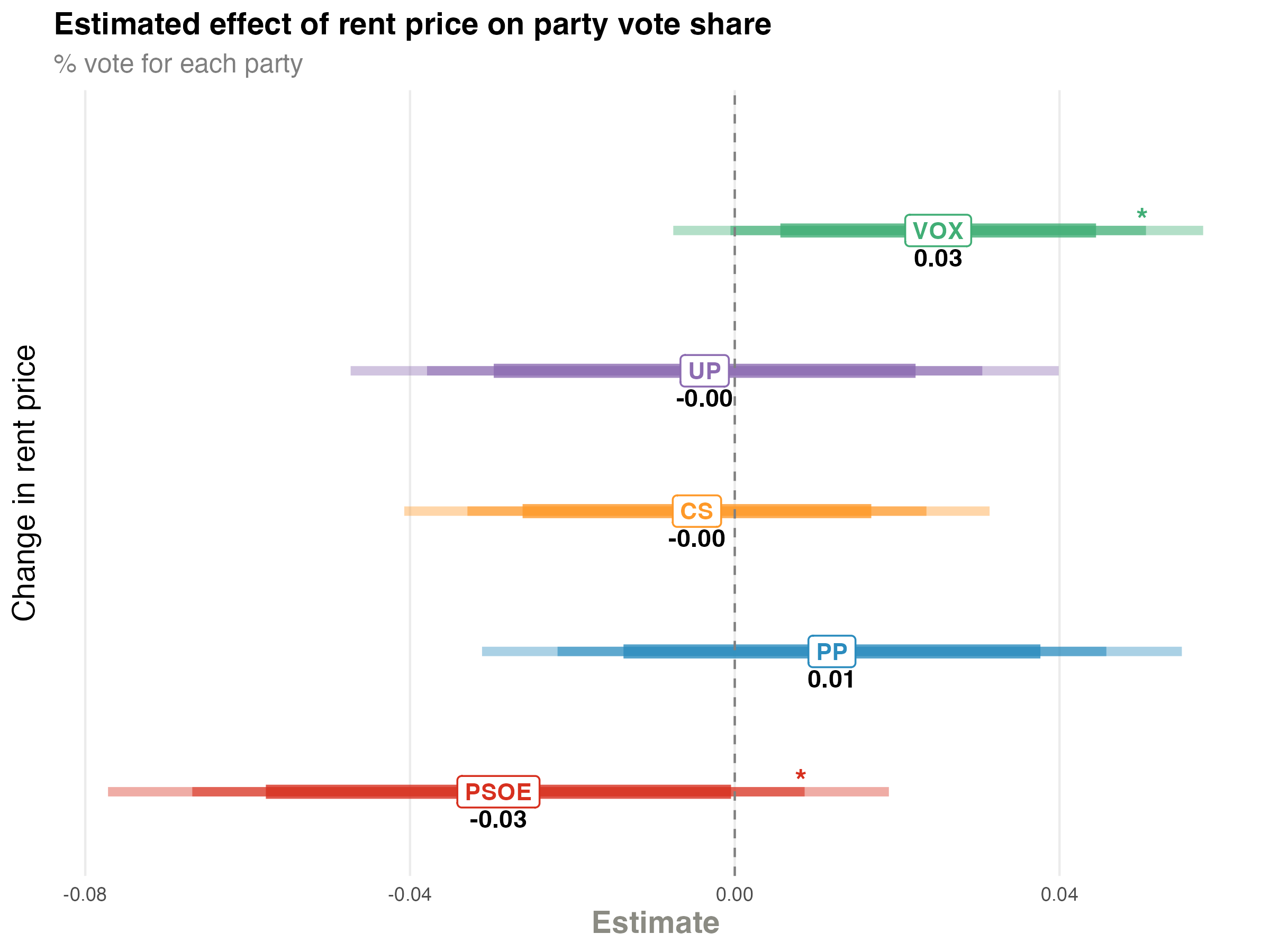
Existing research indicates that the electoral effects of changing house rents depend on political parties’ left-right positioning and adherence to populist ideas. This paper explores the association between house rent increases and voting in Madrid by exploiting the availability of fine-grained data at the census tract-level, and the existence of an electoral arena where parties compete from different positions on crucial dimensions such as populism and the intervention of the state in the economy. In particular, we focus our analysis on non-populist parties of the main stream left (PSOE) and right (Ciudadanos and PP), a radical right party with a strong neoliberal discourse and inconsistent populist appeals (VOX), and a radical left party that has traditionally adopted a populist discourse (Unidas Podemos). Our main results indicate that house rent increases benefit right-wing parties in neighbour hoods with high ownership rates (economic gain), thus offering an alternative context-dependent mechanism to explain the success of (liberal) radical right parties when house rents rise. They also suggest that house rent in creases associate with voting for left-wing parties, especially if they adhere to populist ideas, in neighbourhoods with lower levels of homeownership (economic burden).
- eldiario.es · El estudio que descubre cómo influye el 'efecto alquiler' en el voto de Madrid, según el barrio en el que vivas — Barragán, L. (09/02/2026)
@article{sanchezgarcia_rents_2026, title = {Burdens and gains. {The} association between house rent increases and voting in the city of {Madrid}}, author = {S{\'a}nchez-Garc{\'i}a, {\'A}lvaro and Marcos-Marne, Hugo}, journal = {Electoral Studies}, doi = {10.1016/j.electstud.2025.103024}, pages = {1-11}, year = {2026}, } -
 Fight Club: The electoral competition on the Spanish Radical Right-WingImanol Negral and Álvaro Sánchez-GarcíaRevista Española de Ciencia Política, 2026
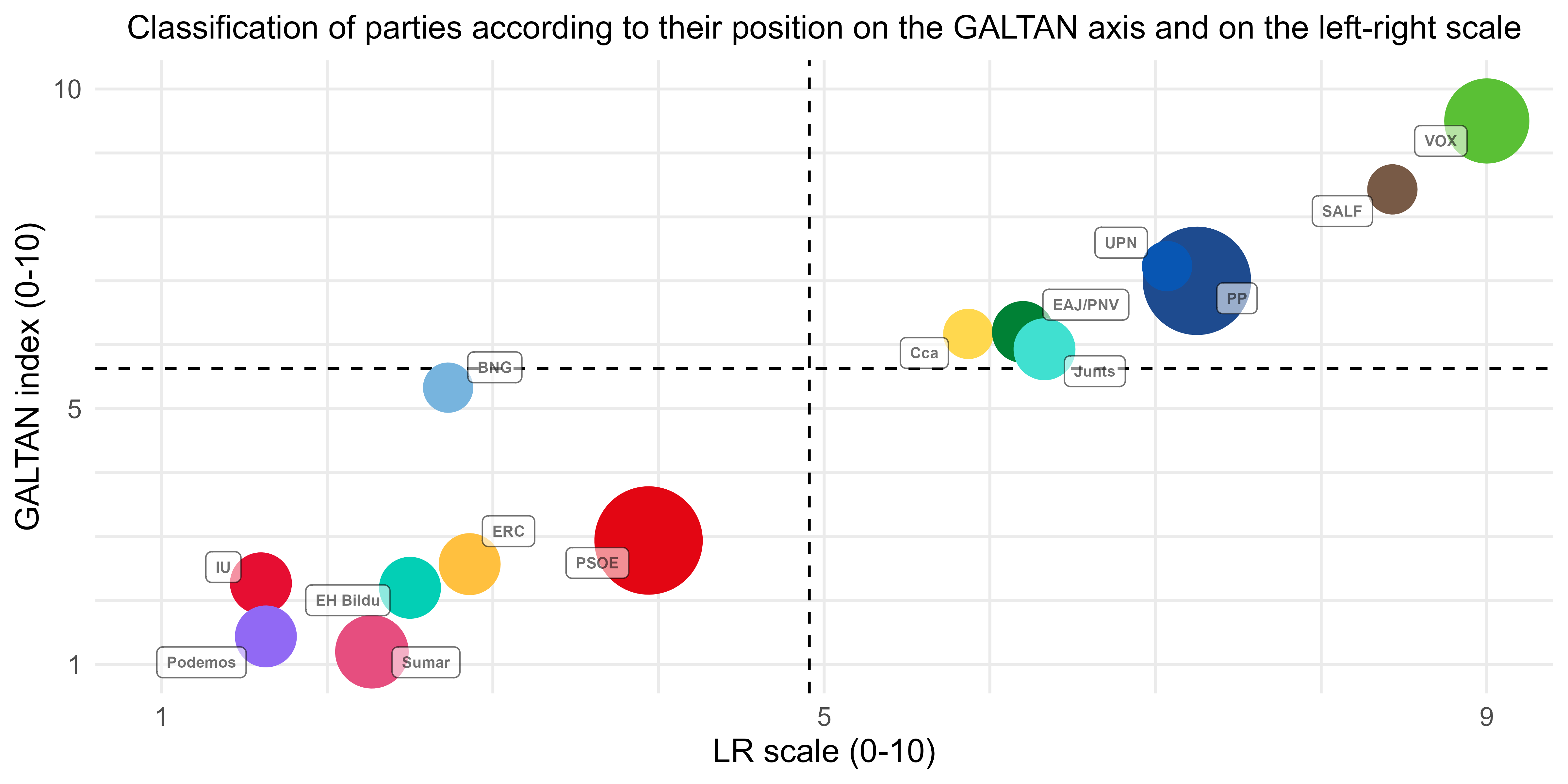
The rise of VOX in 2018 put an end to Spanish exceptionalism in the absence of a genuine radical right-wing party. However, the emergence of Se Acabó la Fiesta (SALF) in 2024 consolidated an unprecedented scenario: the coexistence of two national players competing for a similar electorate. Although both are ideologically close, this work shows that they mobilise different voter profiles. Through an empirical analysis based on an extensive battery of surveys from the Sociological Research Centre (CIS), this study examines the factors that explain the distribution of electoral support between VOX and SALF. The results indicate that nativism —an attitude commonly tied to the radical right— does not play a decisive role in the competition between VOX and SALF. Nevertheless, authoritarianism is positively associated with support for VOX. In contrast, anti-partitocracy attitudes and the use of social media as a channel of information are the main predictors of voting for SALF. This research contributes to the literature on the fragmentation of the radical right in Europe. It also offers keys to understanding the competition in this space in Spain, showing that SALF attracts an electorate far removed from classic ideological frameworks of the radical right, despite its discursive alignment with that family of parties.
@article{negral_salf_2026,
  title = {Fight Club: The electoral competition on the Spanish Radical Right-Wing},
  author = {Negral, Imanol and S{\'a}nchez-Garc{\'i}a, {\'A}lvaro},
  journal = {Revista Espa{\~n}ola de Ciencia Pol{\'i}tica},
  doi = {10.21308/recp.71.02},
  pages = {37-73},
  year = {2026},
}
2025
-
 Urban jungle, radical roar: sprawl, economic decline and the success of populist radical right in metropolitan SpainÁlvaro Sánchez-García and Iván LlamazaresContemporary Politics, 2025
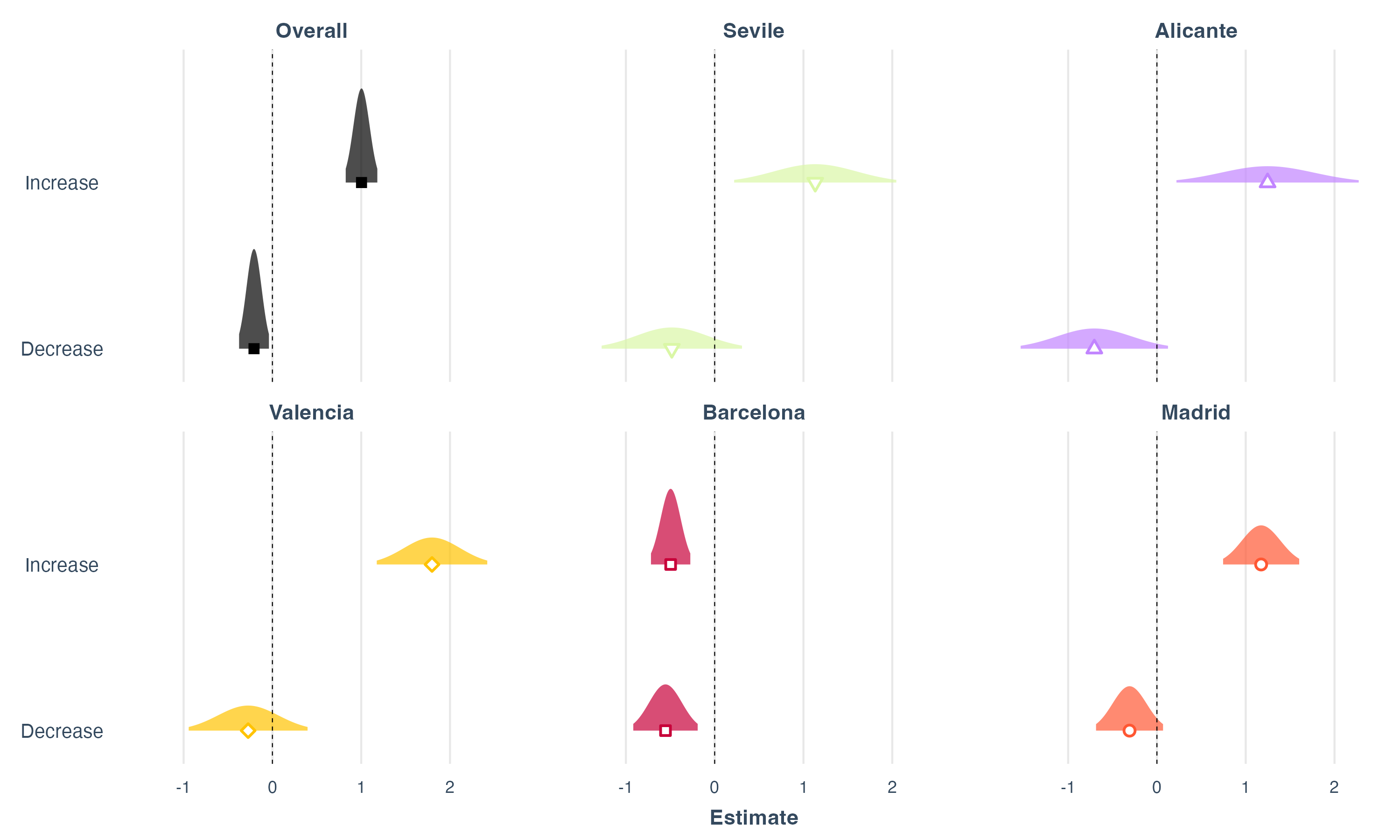
In recent years, Populist Radical Right Parties (PRRPs) have gained significant ground in many Western democracies. While most studies focus on rural areas, this paper examines the role of population growth in explaining support for Vox, Spain’s leading PRRP, in urban areas. Spain o)ers a unique case due to its rapid urbanisation and the substantial presence of Vox in metropolitan settings. Using data from over 27,000 urban census tracts, we find that population growth is positively associated with Vox support, particularly in suburban areas. This e)ect is moderated by socio-economic conditions: it is stronger in neighbourhoods with lower incomes and higher unemployment. Our findings suggest that population growth intensifies support for Vox in left-behind urban areas, underlining the interaction between demographic change and socio-economic disadvantage. These results expand the current understanding of PRRP support by showing that both rural depopulation and urban growth contribute to their success. However, the study’s limitations call for further research across di)erent contexts and with more fine-grained indicators of left-behindness.
@article{sanchezgarcia_urban_2025, title = {Urban jungle, radical roar: sprawl, economic decline and the success of populist radical right in metropolitan {Spain}}, author = {S{\'a}nchez-Garc{\'i}a, {\'A}lvaro and Llamazares, Iv{\'a}n}, journal = {Contemporary Politics}, doi = {10.1080/13569775.2025.2573484}, pages = {1-19}, year = {2025}, } -
 Where has everyone gone? Depopulation and voting behaviour in SpainÁlvaro Sánchez-García, Toni Rodon, and Maria Delgado-GarcíaEuropean Journal of Political Research, 2025
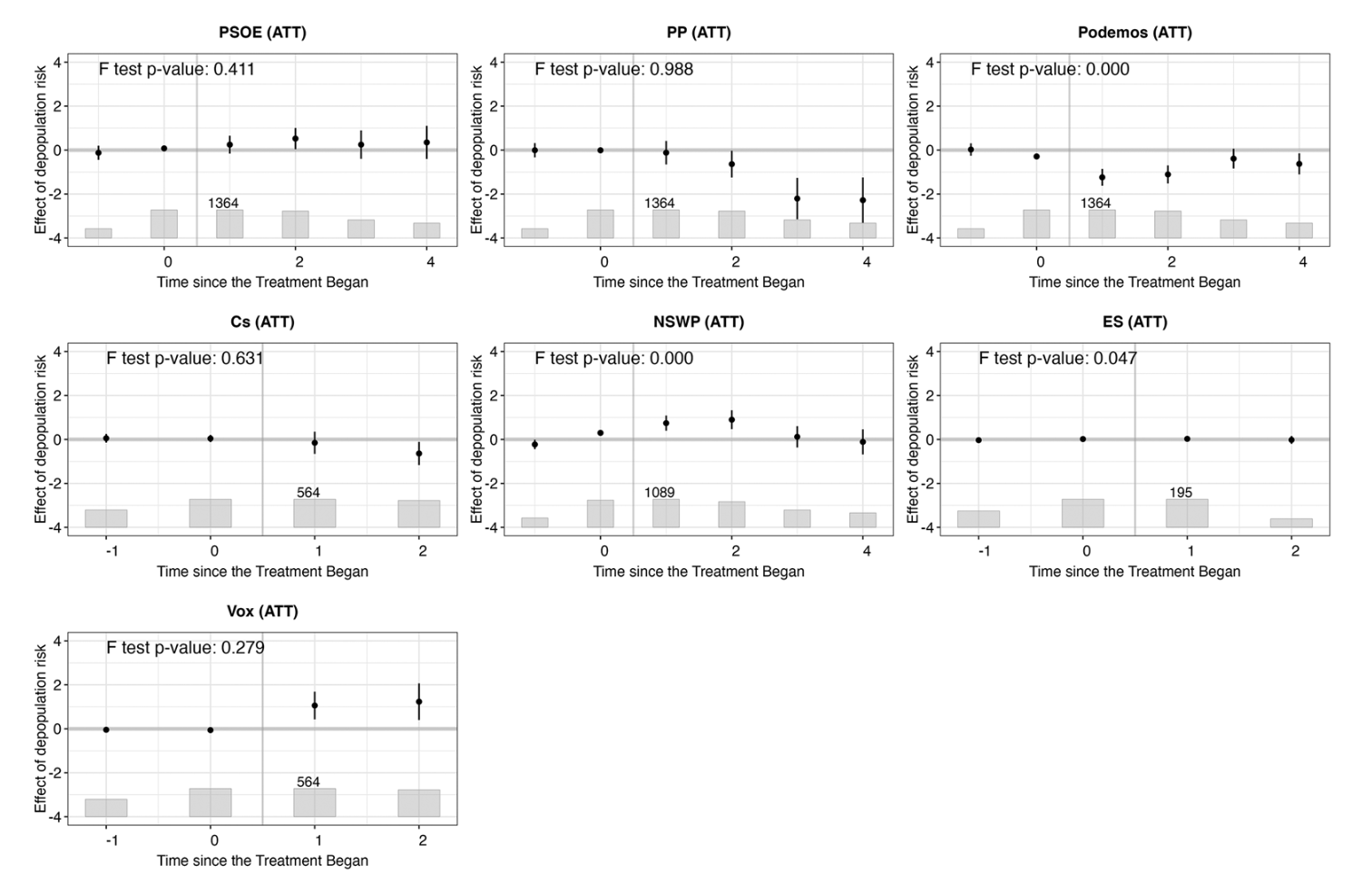
In many European countries, people increasingly leave rural or small municipalities to live and work in urban or metropolitan environments. Although previous work on the ?left behind? places has examined the relationship between the rural?urban divide and vote choice, less is known about how depopulation affects electoral behaviour. Is there a relationship between experiencing a loss in population and support for the different parties? We investigate this question by examining the Spanish case, a country where the topic of depopulation has become a salient issue in political competition. Using a newly compiled dataset, we also explore whether the relationship between depopulation and electoral returns is moderated by municipality size, local compositional changes, the loss of public services and changes in amenities. Our findings show that depopulated municipalities give higher support to the main Conservative party, mainly in small municipalities. Yet, municipalities on the brink of disappearance are more likely to give larger support to the far-right. Results overall show that the effect of depopulation seems to be driven by compositional changes, and not as a result of losing public services or a deterioration of the vibrancy of the town. Our findings have important implications for our understanding of the relationship between internal migration and electoral behaviour.
- Populism Observer (POP) · Interview: Depopulation and its impact on voting in Spain — Manucci, L. (04/11/2024)
- RNE (Spanish National Radio) · Álvaro Sánchez-García en la cuarta hora de Las Mañanas de RNE — Cuní, J. (02/10/2024)
- El País · La despoblación en las zonas rurales alimenta a la derecha y a los ultras — Navarro, J. (28/09/2024)
- UPF News · El despoblament de les zones rurals espanyoles afecta el comportament electoral i beneficia el PP (15/07/2024)
- Nada es Gratis · La despoblación y su efecto sobre el comportamiento electoral — Sánchez-García, Á., Rodon, T. and Delgado-García, M. (11/07/2024)
@article{sanchezgarcia_where_2025,
  title = {Where has everyone gone? Depopulation and voting behaviour in Spain},
  author = {S{\'a}nchez-Garc{\'i}a, {\'A}lvaro and Rodon, Toni and Delgado-Garc{\'i}a, Maria},
  journal = {European Journal of Political Research},
  doi = {10.1111/1475-6765.12702},
  pages = {296-319},
  volume = {64},
  number = {1},
  year = {2025},
}
2024
-
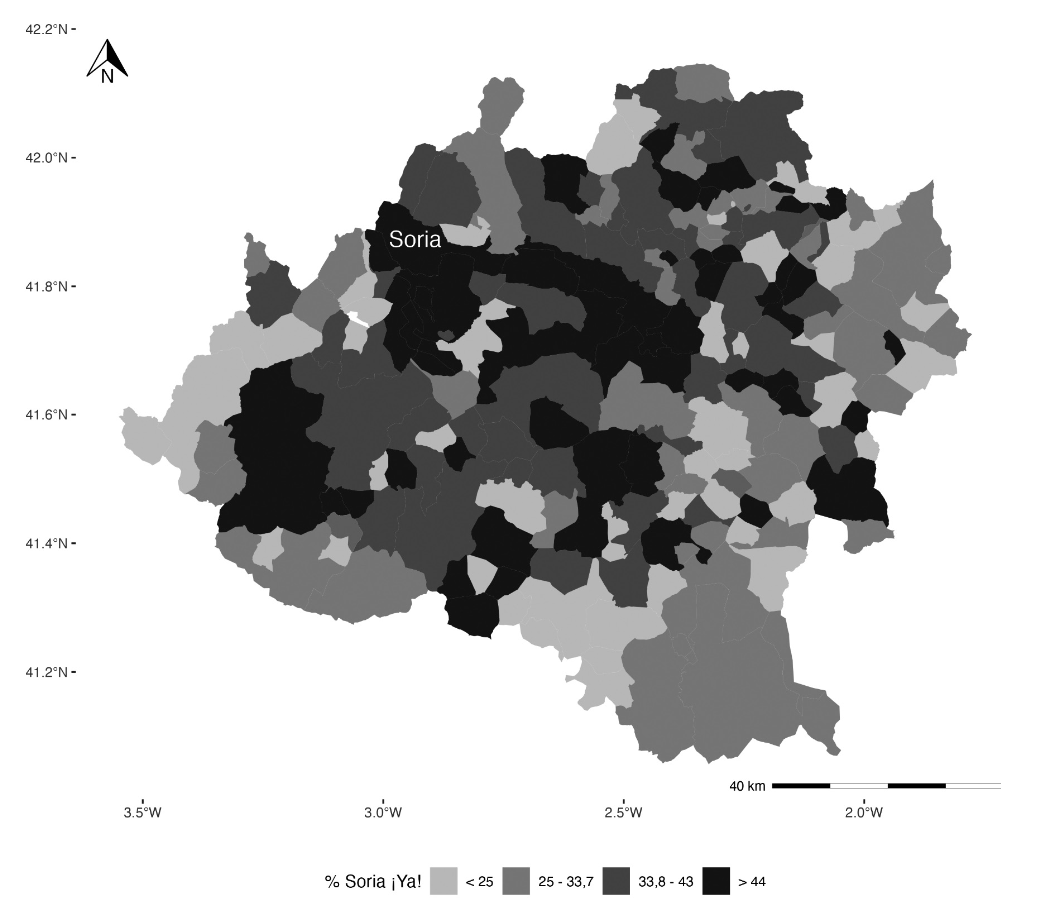 ¡Aquí no hay quien viva! El Éxito electoral de las Candidaturas de la España VaciadaÁlvaro Sánchez-García and Maria Delgado-GarcíaPapeles del CEIC, 2024
The present article approaches, from an electoralist point of view, an issue in full swing: the emptied Spain. We took Teruel Existe! and Soria Ya! as a case selection, being these the only candidacies of the Plataforma de la España Vaciada (Emptied Spain Platform) that have achieved parliamentary representation. Adopting an exploratory perspective, we try to find out what were the factors at the municipal level that influenced the success of the Candidatures of Empty Spain (CEV). To address this question, we adopted a combined methodology. First, we performed a cluster analysis that allows us to classify the municipalities according to their nature. Secondly, using a linear regression model we explore which of these characteristics influenced the electoral performance of the CEVs. The results show that the success of these formations is found in municipalities close to provincial capitals, with a larger than average size and with a reduced presence of unemployed. However, the factor that shows to have the greatest weight in all the work was the holding of political events at the time of the electoral campaign.
@article{sanchezgarcia_aqui_2024,
  title = {¡Aqu{\'i} no hay quien viva! {El} {\'E}xito electoral de las Candidaturas de la España Vaciada},
  author = {S{\'a}nchez-Garc{\'i}a, {\'A}lvaro and Delgado-Garc{\'i}a, Maria},
  journal = {Papeles del CEIC},
  doi = {10.1387/pceic.24103},
  year = {2024},
}
2023
-
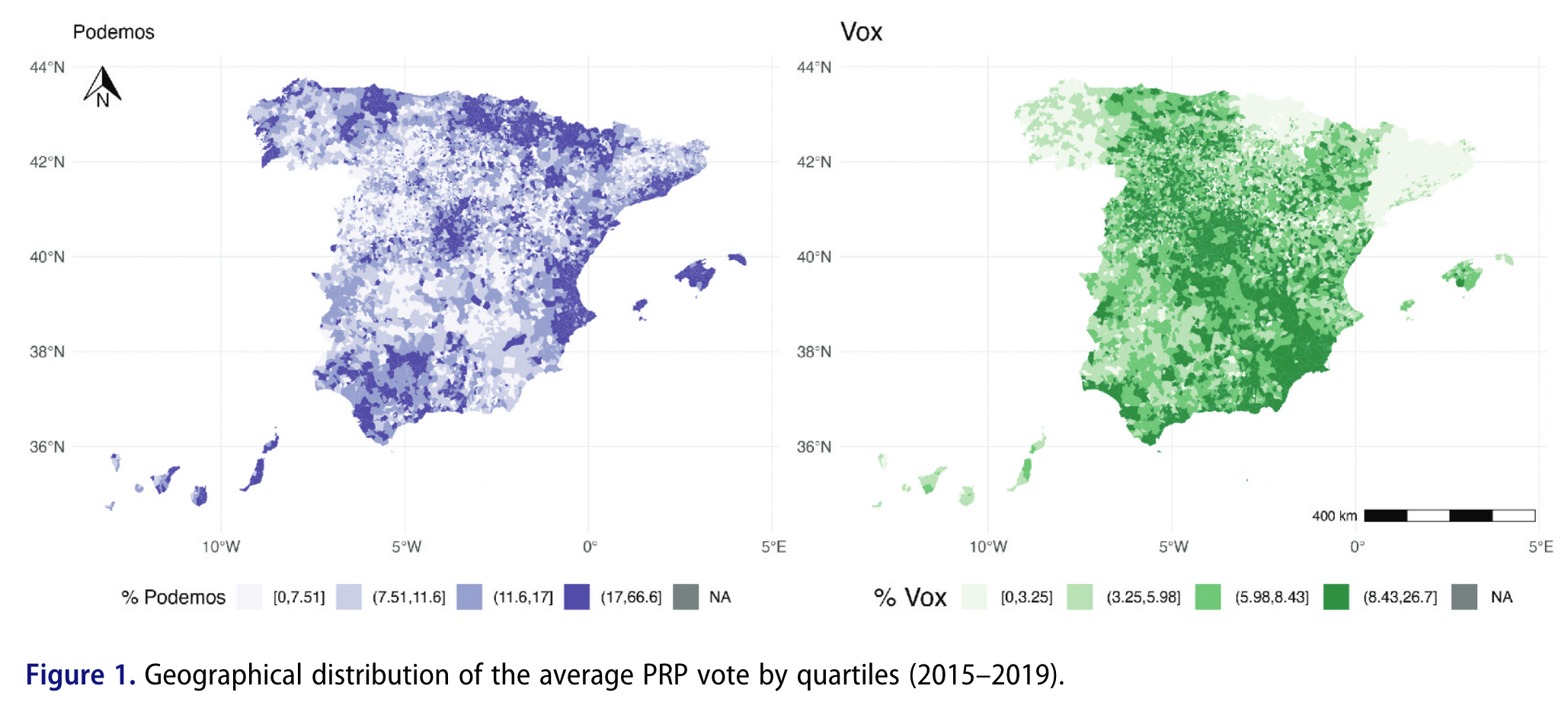 Different sides, same story. Common factors that contributed to the success of the populist radical parties in SpainÁlvaro Sánchez-García and Imanol NegralJournal of Contemporary European Studies, 2023
Voting for Populist Radical Parties (PRPs) in Europe has been a frequent subject of study in recent decades. However, little research has analysed the common factors between ideologically opposed PRPs. In this article we fill this gap in the literature from an ecological perspective at the municipal level. Using the cases of Podemos and Vox in Spain, we analyse whether the same characteristics at the municipal level explain the electoral perfor mance of both parties. To address this question we use the results of the four general elections in which both parties have run. The results confirm an archetype of municipal-level characteristics that explain the success of both PRPs in Spain. These parties had more support in (sub-)urban contexts; with high levels of political disaffection and high incomes. Furthermore, we compare these findings with the pre-existing literature for their European peers and test the peculiarity of the Spanish case.
@article{sanchezgarcia_different_2023, title = {Different sides, same story. Common factors that contributed to the success of the populist radical parties in {Spain}}, author = {S{\'a}nchez-Garc{\'i}a, {\'A}lvaro and Negral, Imanol}, journal = {Journal of Contemporary European Studies}, doi = {10.1080/14782804.2023.2230158}, pages = {228–245}, volume = {32}, number = {1}, year = {2023}, } -
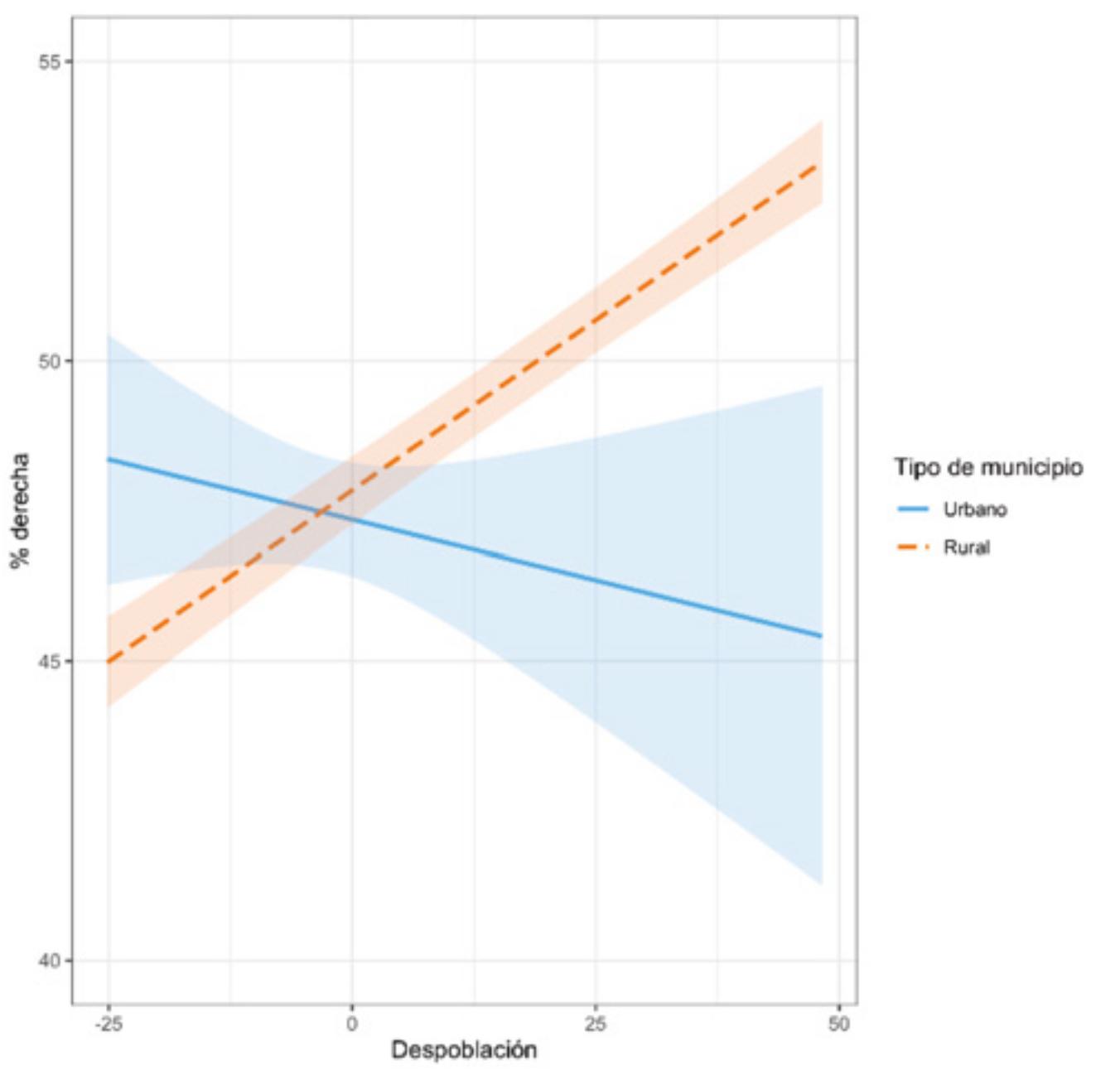 A río revuelto, ganancia de conservadores: Un análisis de la despoblación y el comportamiento electoral en la España vacíaÁlvaro Sánchez-García and Toni RodonRevista de Estudios Políticos, 2023
Over the last years, political parties have increased their efforts to garner electoral support in the so-called ‘empty Spain’. A part of Spain, where recent depopulation dynamics have been intense, allocates 79 parliamentary seats in the Spanish Congress of Deputies and it has emerged as an important electoral asset. Yet, what is the relationship between depopulation and political behaviour? Has the decrease in population benefited or damaged certain parties? As a result of it, has electoral participation increased or decreased? Using a new dataset that includes the share of the votes of different parties and the depopulation dynamics between 2008 and 2019, this article aims at contributing to the existing literature by analysing a phenomenon which we still know little about. To do so, we use the five regions that, according to Sergio del Molino (2016), make up Empty Spain. The analyses indicate that depopulation is related to a significant increase of mobilization and vote for the conservative parties, an effect that is fundamentally driven by demographic compositional changes triggered by young people, who are more likely to be left-wing, but also more likely to move out to urban areas.
@article{sanchezgarcia_rio_2023,
  title = {A río revuelto, ganancia de conservadores: Un análisis de la despoblación y el comportamiento electoral en la España vacía},
  author = {S{\'a}nchez-Garc{\'i}a, {\'A}lvaro and Rodon, Toni},
  journal = {Revista de Estudios Pol{\'i}ticos},
  doi = {10.18042/cepc/rep.199.07},
  pages = {197-224},
  number = {199},
  year = {2023},
}
2022
-
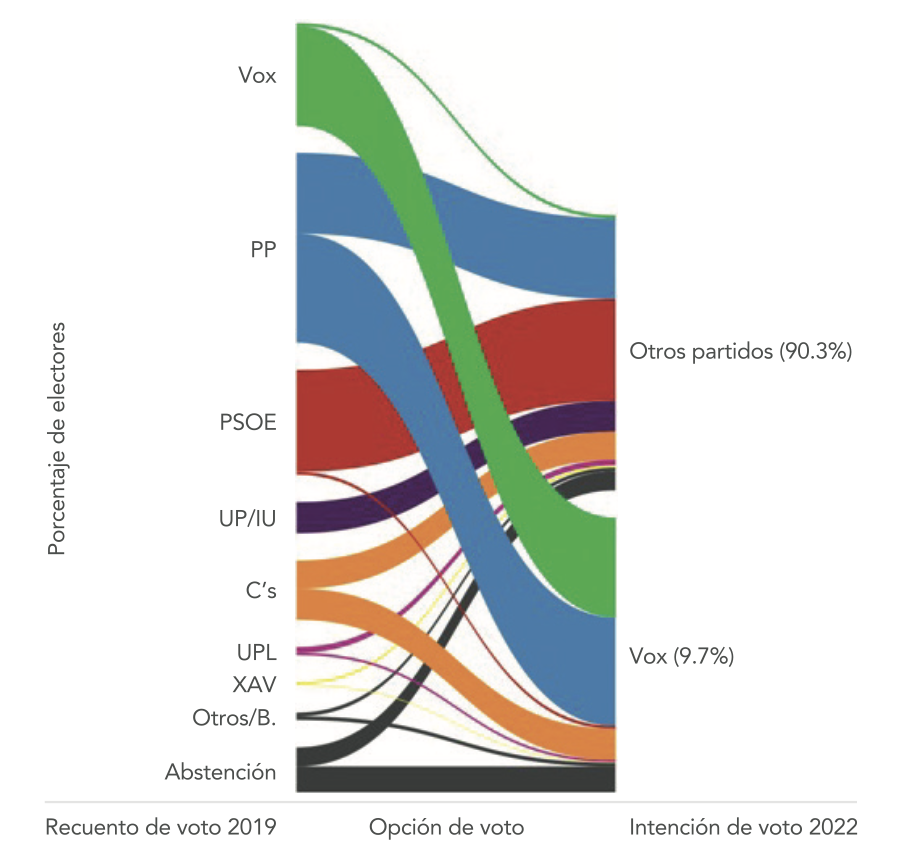 La semilla de Vox, ¿quién votó a la derecha radical populista en Castilla y León?Imanol Negral and Álvaro Sánchez-GarcíaRevista SOCYL, 2022
This paper presents the results of a case study based on empirical evidence on political demand factors that allow us to analyze the political-electoral success of Vox in Castilla y León. We develop a multilevel logistic regression analysis using data from the CIS pre-electoral survey on the 2022 regional elections in the region. The results show that the characteristics of the Vox electorate in Castilla y León do not fully match those of Vox in the Spanish scenario, nor those of the European Populist Radical Right. Finally, we discovered that Vox’s moment of political and electoral apogee is explained by the fact that the formation draws on a very transversal and volatile electorate. Vox has been able to attract voters with two specificities. First, unlike its European peers, it has managed to mobilize the region’s economic elite. Second, it has attracted voters critical of the current situation in Castilla y León and disaffected withthe management of the Junta’s goverment.
@article{negral_semilla_2022,
  title = {La semilla de Vox, ¿qui{\'e}n vot{\'o} a la derecha radical populista en Castilla y Le{\'o}n?},
  author = {Negral, Imanol and S{\'a}nchez-Garc{\'i}a, {\'A}lvaro},
  journal = {Revista SOCYL},
  doi = {10.48225/SOCYL202202},
  pages = {16--37},
  number = {2},
  year = {2022},
}
🛠️ Working papers 3
- From the bullring to the ballot box: How cultural symbols shape voting behaviourÁlvaro Sánchez-García
Public infrastructures can operate as powerful cultural symbols shaping political behaviour. This paper argues that bullrings, deeply embedded in Spanish folklore and historically associated with nationalism and traditionalism, influence electoral preferences through two complementary mechanisms. First, repeated exposure to bullrings makes national identity more cognitively salient, affecting political behaviour in surrounding neighbourhoods. Second, municipalities hosting bullrings foster social norms favourable to bullfighting, increasing support for parties defending these traditions.
I assemble an original geo-referenced dataset of Spanish bullrings and evaluate these arguments across four national elections (2015–2023). To identify the social norm mechanism, I employ entropy balancing at the municipal level. Municipalities hosting bullrings exhibit higher support for traditional parties, particularly the centre-left PSOE, while parties advancing anti-bullfighting positions perform worse. Original survey data further show that individuals socialised in municipalities hosting bullrings are more likely to support traditional parties and less likely to endorse anti-bullfighting options.
To test symbolic exposure, I leverage census-tract data covering over 36,000 neighbourhoods. Proximity to bullrings is associated with higher support for parties promoting Spanish nationalism, especially the Conservative Party (PP), while radical-left parties perform better further away. Overall, these findings show how historically embedded cultural infrastructures shape democratic competition through symbolic exposure and local socialisation, highlighting the political relevance of symbolic built environments.
- The Rural–Urban Gap in Policy PrioritiesJavier Martínez-Cantó and Álvaro Sánchez-García
The rural–urban divide has received renewed attention over the last decade, with a growing body of research documenting differences in the political attitudes and preferences of citizens living in rural and urban areas. Urban residents tend to hold more cosmopolitan views, whereas rural residents generally display more traditional and stable political orientations. However, we know much less about whether these two groups also differ in the policy issues they prioritize. This question is important because the observed representation gap between rural and urban populations may be driven not only by differences in policy preferences, but also by differences in policy priorities. Despite its relevance, existing evidence on territorial differences in policy priorities remains largely confined to the United States (Yildirim and Solvig, 2025). In this study, we address this gap using individual-level data from more than 200 surveys conducted by the Spanish Centro de Investigaciones Sociológicas (CIS) between 2002 and 2025. The surveys include the Most Important Problem (MIP) question and have been merged into a single dataset and coded using the Comparative Agendas Project (CAP) framework. This unique data source allows us to examine differences in policy priorities between rural and urban residents while accounting for a wide set of compositional factors that may shape individual policy concerns.
- Red Lights. The Political Consequences of Traffic Restrictions: Causal Evidence from MadridÁlvaro San Román and Álvaro Sánchez-García
In recent years, urban governments across Europe have increasingly implemented restrictions on car mobility in dense city centers, often justified on environmental grounds. Policies such as Low Emission Zones (LEZs) or pedestrianization initiatives aim not only to reduce pollution but also to improve overall quality of life. While prior research shows that such policies often generate local opposition or fail to yield electoral gains for implementing governments, we know less about how the costs and benefits of these measures are spatially distributed. Furthermore, although frequently framed through an environmental lens, these mobility policies predate the politicization of climate change and are promoted by a broader spectrum of political parties than typically assumed.
This paper examines the political consequences of two mobility restriction policies introduced in Madrid under very different ideological contexts. First, we analyze the 2002 implementation of the Regulated Parking Zone (Servicio de Estacionamiento Regulado, SER) by the conservative Partido Popular, in power from 1989 to 2015. Second, we assess the 2018 introduction of Madrid Central, a far more restrictive policy enacted by the leftist municipal government of Ahora Madrid (2015–2019). While the SER zones aimed to reduce car presence by limiting parking to residents but permitting circulation, Madrid Central prohibited non-resident vehicles from entering the zone entirely. We interpret these two cases as representing a broader ideological cleavage in green policymaking: disincentivization (center-right) versus prohibition (left), each eliciting different levels and patterns of citizen opposition.
Using a novel fine-grained data set (census tract-level, the most disaggregated administrative unit in the Spanish administration), we rely on causal techniques such as TWFE, DiD, and RDD. We find that while both policies generated local electoral backlash, opposition was significantly higher against Madrid Central. However, this opposition is not evenly distributed: residents living just outside the restricted zones, who experience spillover effects without direct benefits, are the most penalizing. In contrast, residents within the restricted zones, who enjoy improved local conditions, tend to reward the incumbent government. These findings highlight the importance of spatially disaggregated analysis in understanding the electoral consequences of urban environmental policies.